I was recently asked to make a personalized notebook and the following book is the result. Below is a short video of the process. I have 2 more covers without names that could be made into a personal book as an awesome gift (click here for more information on the notebooks available).
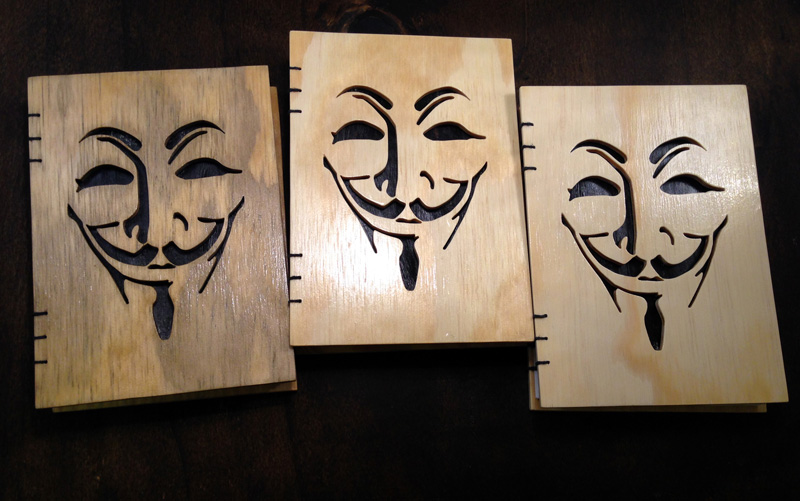
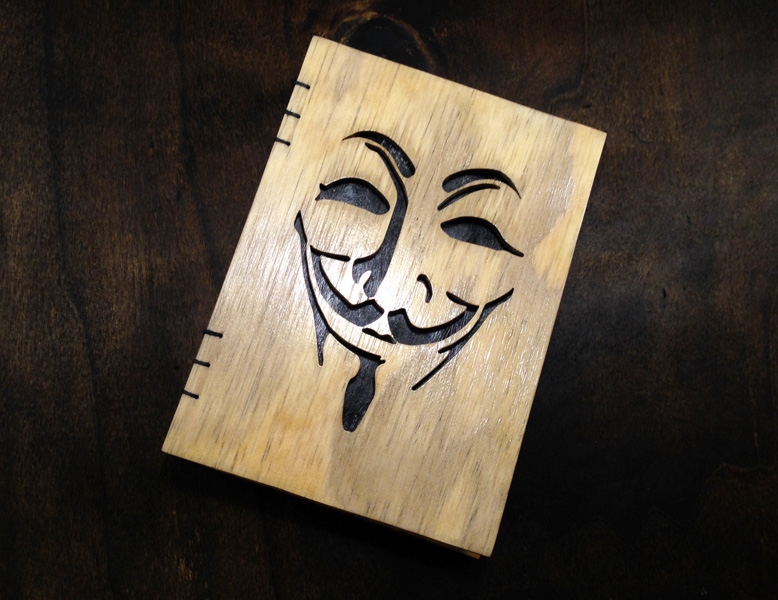
Some of the items that I really enjoy to make are notebooks with wooden covers, bound with Coptic-stitching. The front cover often have an image cut with a scroll saw. In this post I make notebooks with the image of the Guy-Fawkes mask, currently associated with the hacktivist group Anonymous:
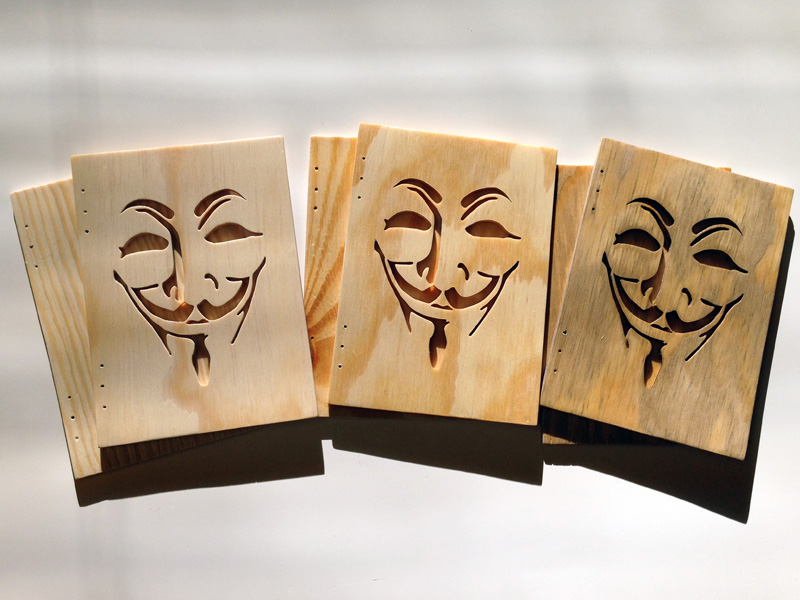
Completed notebooks – 3 different colors
—–
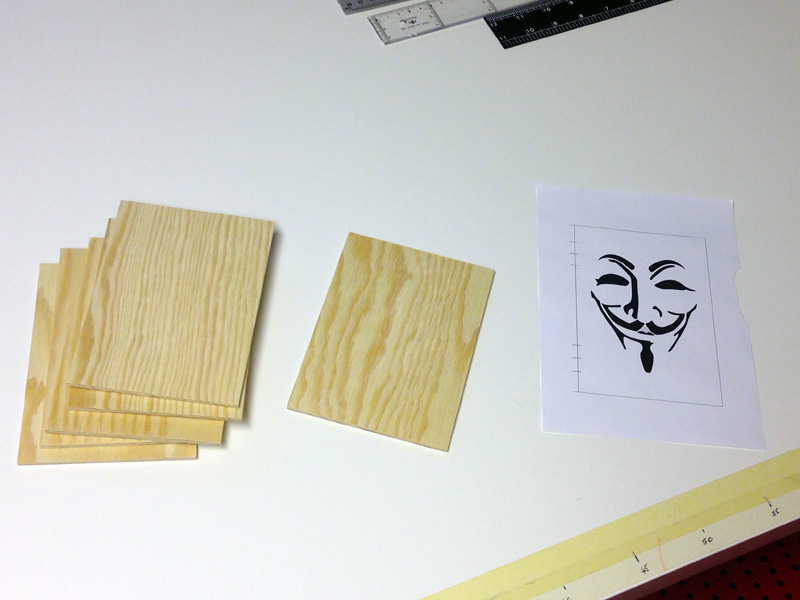
There are three parts to making these books. The first is making the covers, the second is making the signatures and last part is binding everything together. I start making the covers. For this book I use A6 sized pine covers.
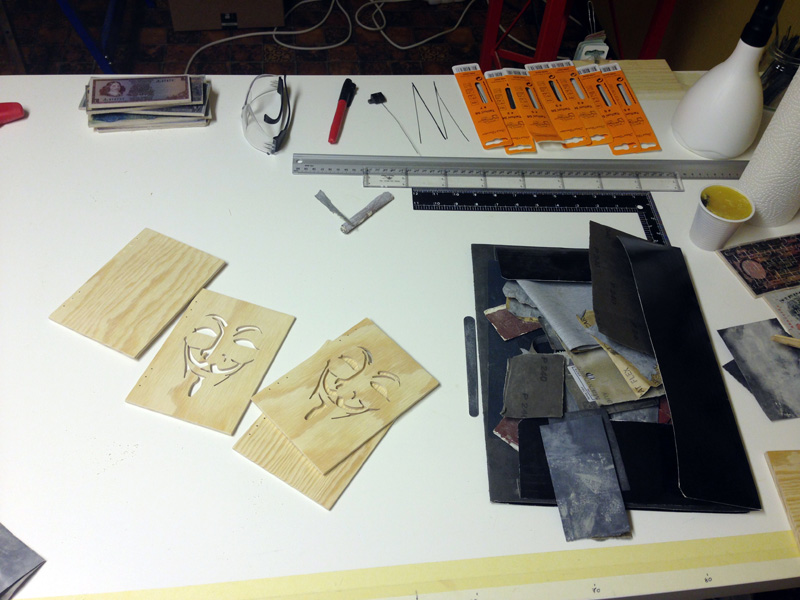
Blank A6 covers and pattern
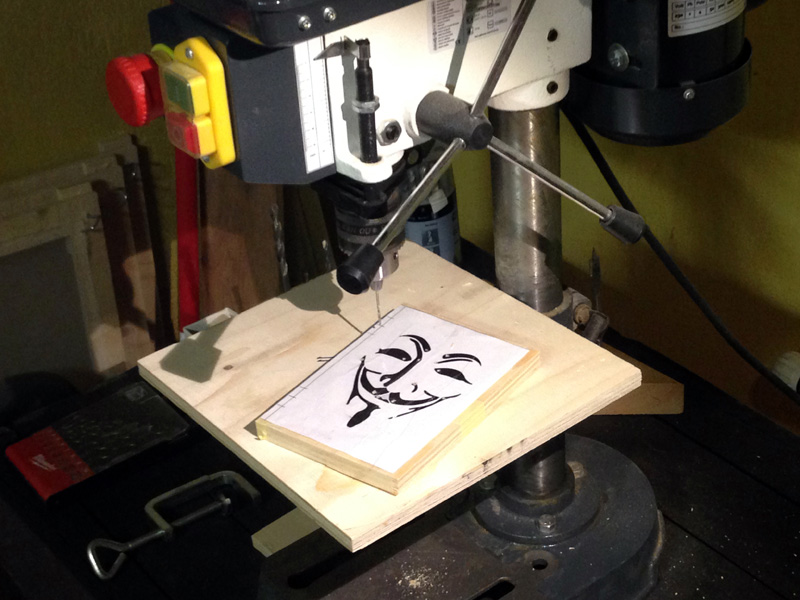
I use tape three blank covers together, to make a stack to be cut at the same time, and stick the pattern on. I add clear tape over the cover to kelp with lubricating the blade while cutting and also not to smudge the printed image (I need a better quality printer…). The next step is to drill the entry holes.
Drilling the entry holes
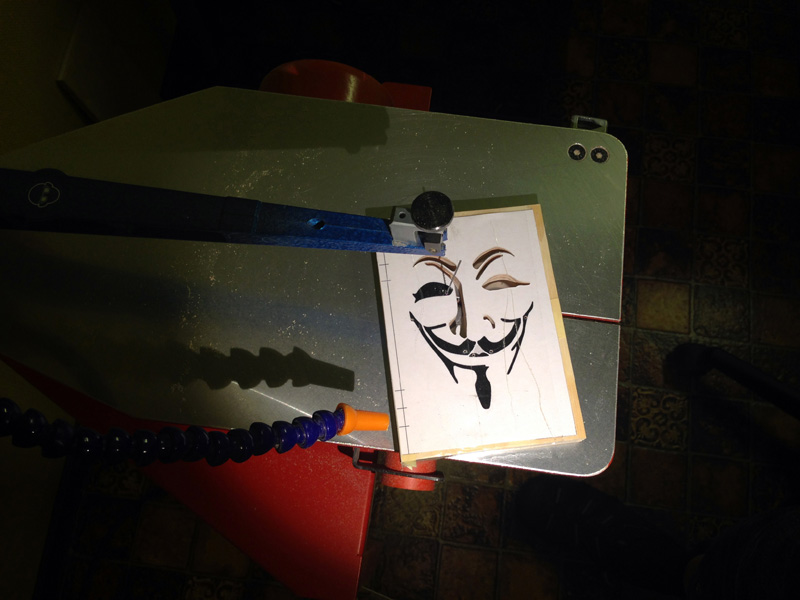
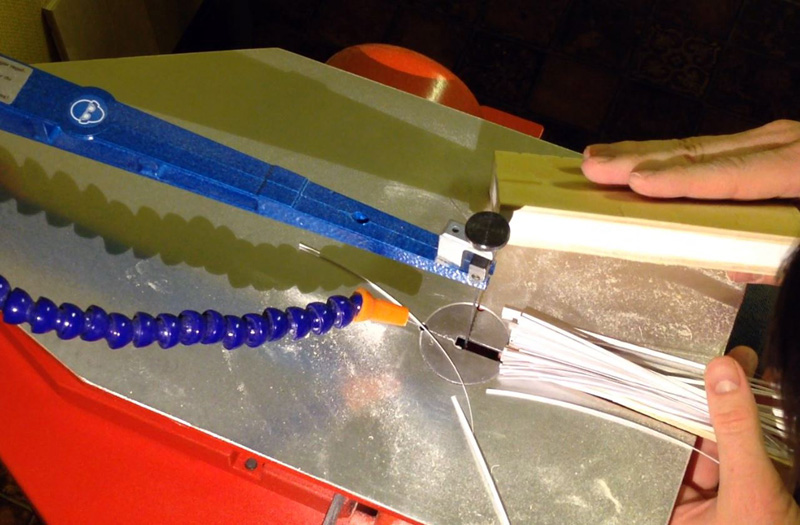
After the holes are drilled, I can begin with cutting the image. I use a #5 reverse tooth scroll saw blade for this image. This image is quite easy to cut since it is reasonably big and it takes approximately 40 minutes (at some stage I hope to be a faster).
Scrolling
Before I remove the pattern I add the back covers to the stack and tape them in place. I drill the holes for binding through all 6 covers before removing the pattern and all the tape. Using masking tape (painters tape), before sticking on the pattern makes removal easy. The next step is sanding. I sand the covers to 400 grit and use several small strips and emery boards on the inside of the image.
Sanding – one constant in woodwork
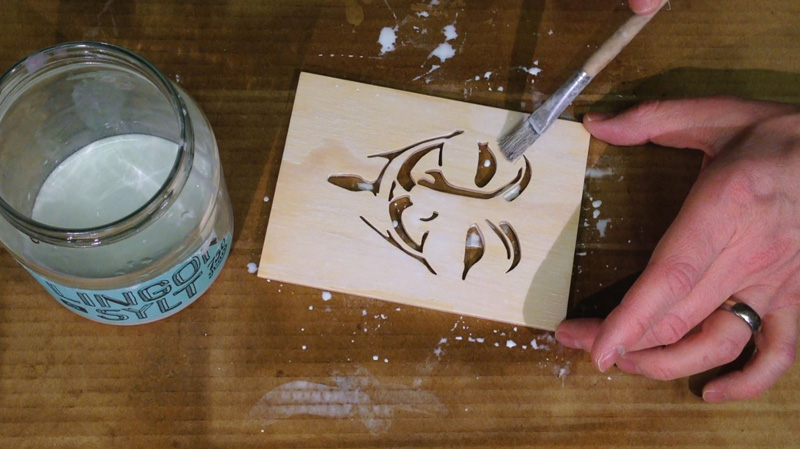
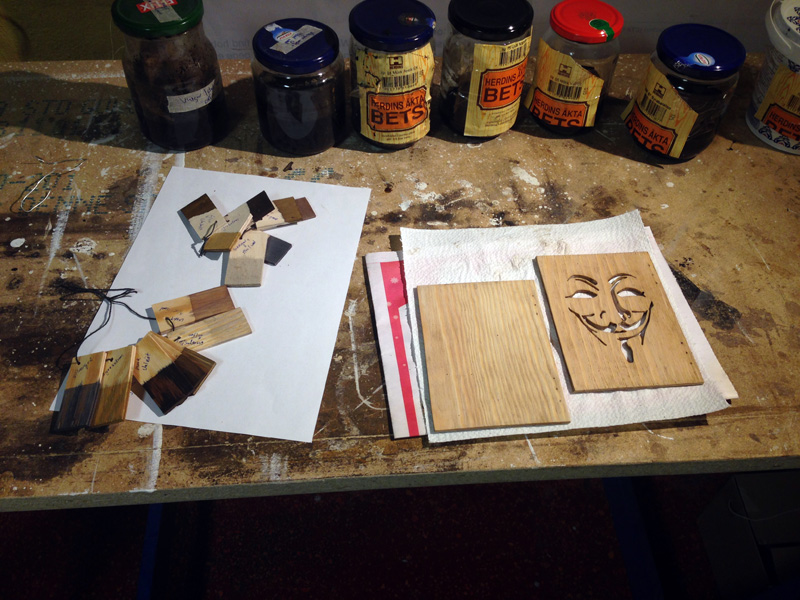
I made three notebooks and decided to make each one slightly different in color. The first I kept natural pine cover. The second I painted with a diluted, water based, acrylic paint to give a slightly white wash appearance. The third cover was stained with a home made stain of vinegar, steel wool and coffee. This gives the wood a grayish aged look. After the stain and paint dried, I added 4 layers of glossy lacquer.
Painting with diluted white paint
Drying after staining
Painted, stained and lacquered – from left – White wash, Natural, Stained
After the covers are done I make the signatures. For each book I make 9 signatures with 12 pages – 108 pages per book. To make each signature I take three A4 pages and fold in half 2 times. I stack the 9 signatures together and place between 2 pieces of sacrificial wood. I tape the wood together and cut approximately 5mm from three outside sides on the scroll saw using a #9 blade. While bound I also cut the slits in the back of the signatures through which they are bound (see here for more information).
Cutting the pages to size
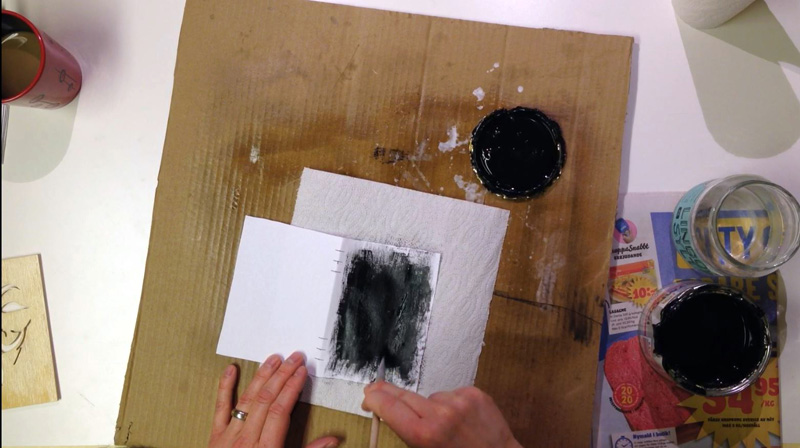
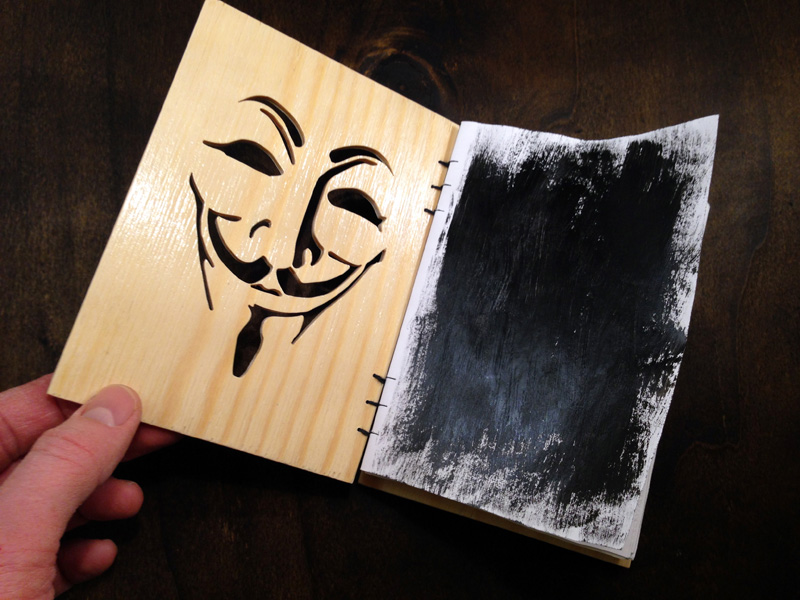
I roughly paint the first page of the first signature black. This is to give a nice contrast to the image when the book is closed.
Painting the first page – note the slits for binding
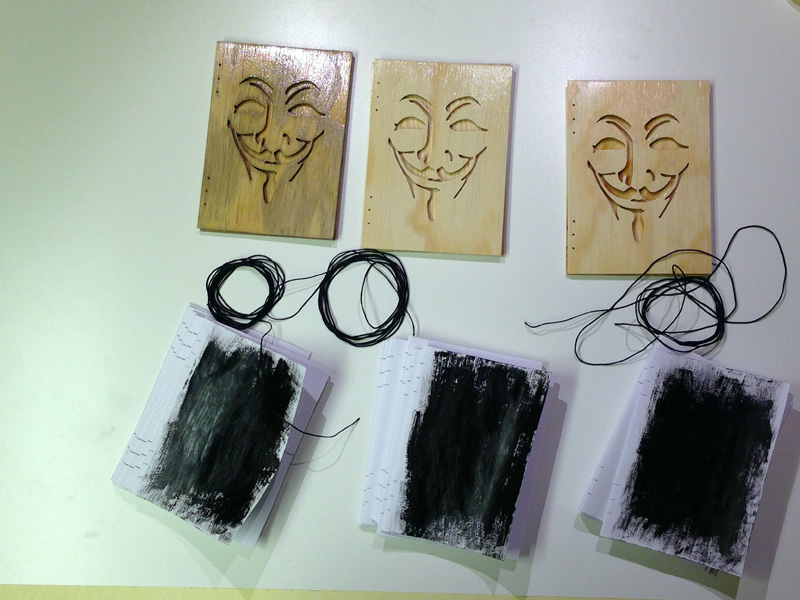
The last item to prepare is the thread. I use black thread that I pull through beeswax to make my own waxed thread.
All the items ready for binding
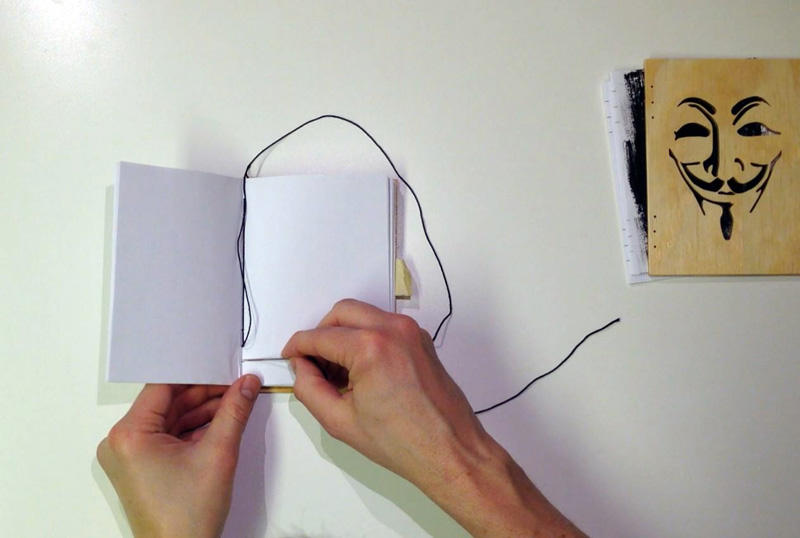
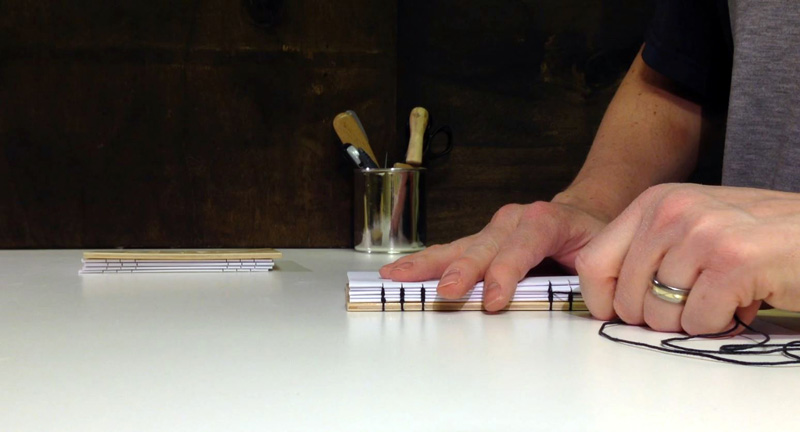
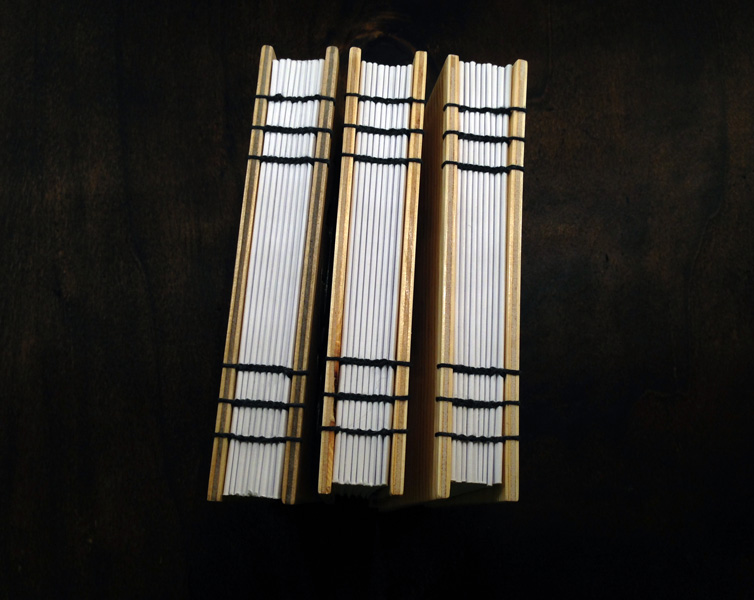
The final step is to bind the book. I use Coptic stitching since it makes a nice pattern on the spine. It also allows for the notebook to open completely. Currently it takes approximately 50 minutes to bind each book (if no mistakes are made).
Hand stitching
Halfway done
The completed books turned out very close to the image I had in mind when starting this project.
Front cover
Inside front cover
Spines with Coptic stitching
I currently have several notebooks and will continue to make more with different designs (I also take requests for custom covers). These three notebooks are however the only “Anonymous cover notebooks” I have and are available here.
I have tried other binding methods and plan to try a few more in the future. I am however working on several other projects that are not notebooks and I will write about these soon…
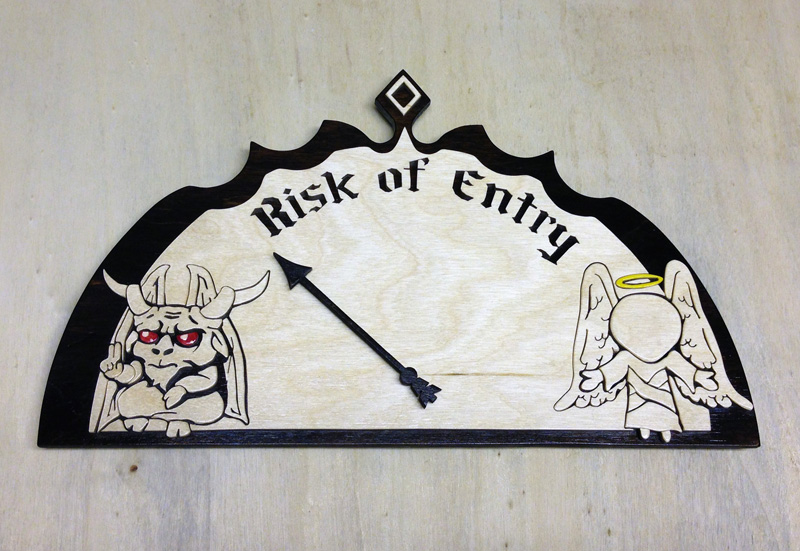
I was recently asked to make a Mood Barometer. Here is an image of the one I made:
Completed Mood Barometer
The customer who approached me indicated that she had safety concerns for her colleagues and other people that she work with during the day 🙂 One way to help them would be for her to have an indicator on her office door. This indicator will provide some information regarding the risk that they place themselves in when approaching her at that specific point in time. We thus discussed the possibility of this mood indicator and and after a few draft designs she approved the construction of the mood barometer shown here.
Following is the a video of the building process. Below I provide some additional images and details for building this or a similar mood barometer. The plans for this item is available here (Pattern for sale on Induku on Etsy).
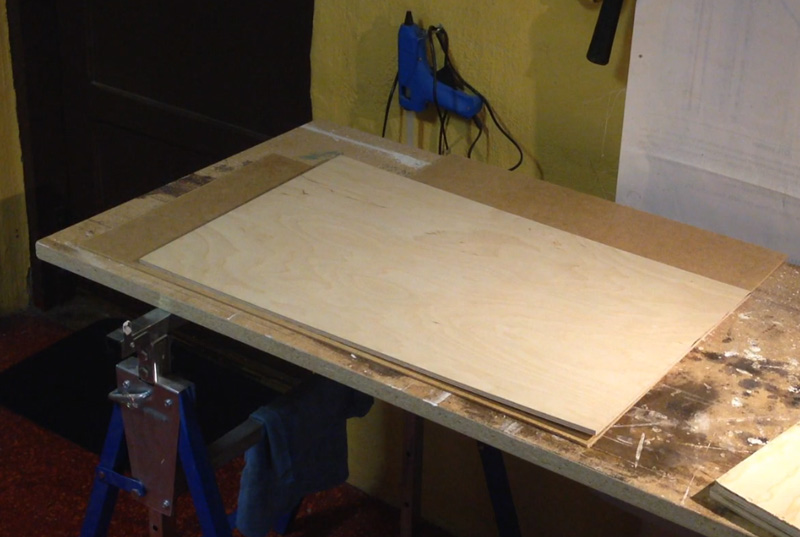
The process starts with cutting the Baltic birch plywood blanks. I decided to use 6mm for the back and 4mm for the front. Plywood are often bent and I found that the 6mm sheet I had in stock was a bit warped. Treatment for this is to apply some water with a sponge to the concave side. I placed it against the heater in my shop with the convex side towards the heat. After a few hours the board was more straight and I clamped it between two flat surfaces overnight to help it flatten out a bit more. The following day it was flat enough to start cutting.
Slightly warped 6mm Baltic birch plywood
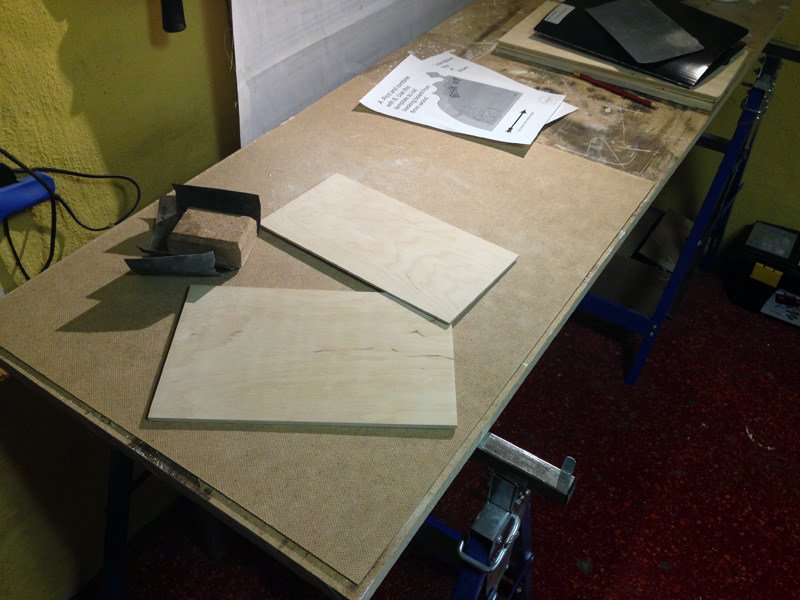
After the templates are cut, I sand both pieces. I find it very useful to sand all before using the scroll saw for many reasons. In this case the first reason is to remove all the irregularities caused by the water. Also many of the pieces, after cutting, are quite small and having an initial sanding on the larger banks is much, much easier. The time sanding after cutting is generally reduced and the main area mainly needs only touching up, rather than complete sanding. This does not mean that there is no sanding after cutting, on the contrary, most of the sanding is done afterwards (see below) but an initial sanding helps a lot!
Initial sanding
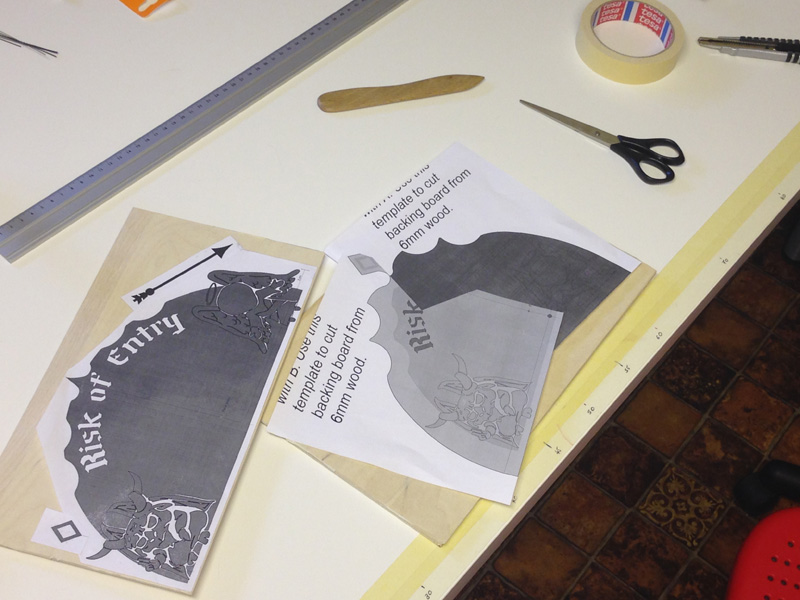
The next step is to add the templates to both pieces. I like to wrap the wood in masking tape (painters tape) since it is very easy to remove once the wood has been cut. It also prevents a lot of the tear-out and fuzzy edges forming. I stick the pattern on the masking tape and cover it with clear tape (this helps to keep the image edges sharp and not smudge during all the handling, it also helps to lubricate the blade).
Preparing the blanks
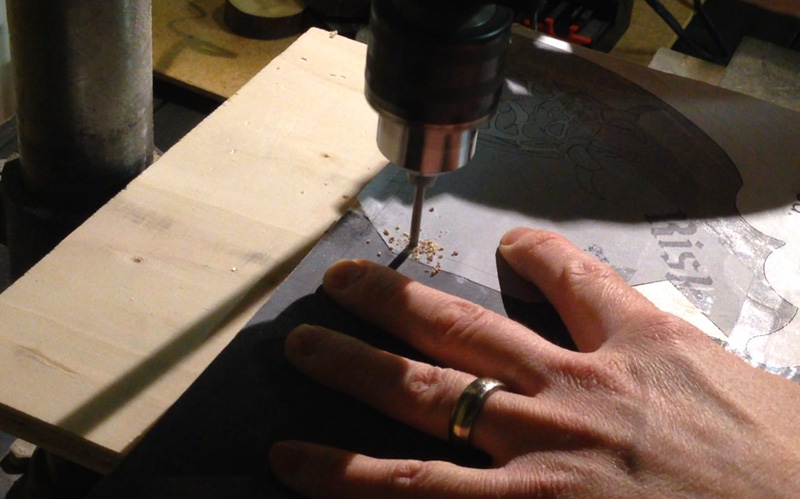
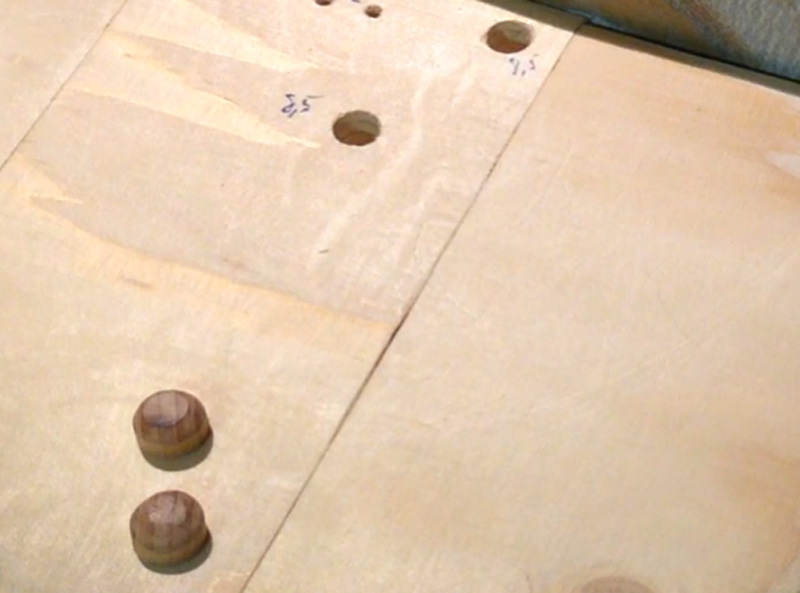
Once the preparation of the blanks are done I drill the hole in which the indicator arrow will pivot. This is quite important to do separately on both pieces while the plans are attach since this will allow for easy alignment later on when the patterns are removed. After this is done I drill all the entry holes for the internal cut areas on the front piece.
Drilling the pivot hole
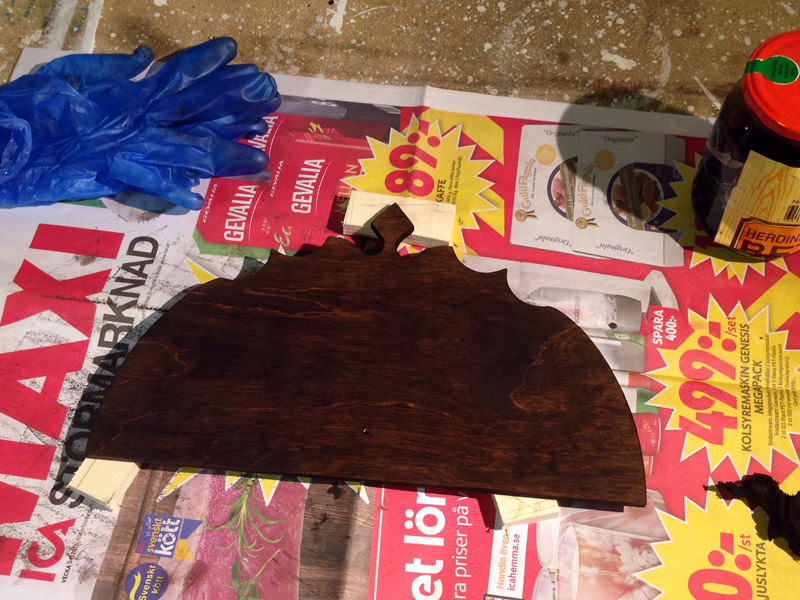
I start the cutting with the the backing piece. This is only one big piece and I cut it with a #5 reverse tooth blade. With this piece cut I stain it using a “Dark Walnut” a water based stain. I add 3 coats with of several hours drying and light sanding in between.
Backing piece cut and stained – first coat
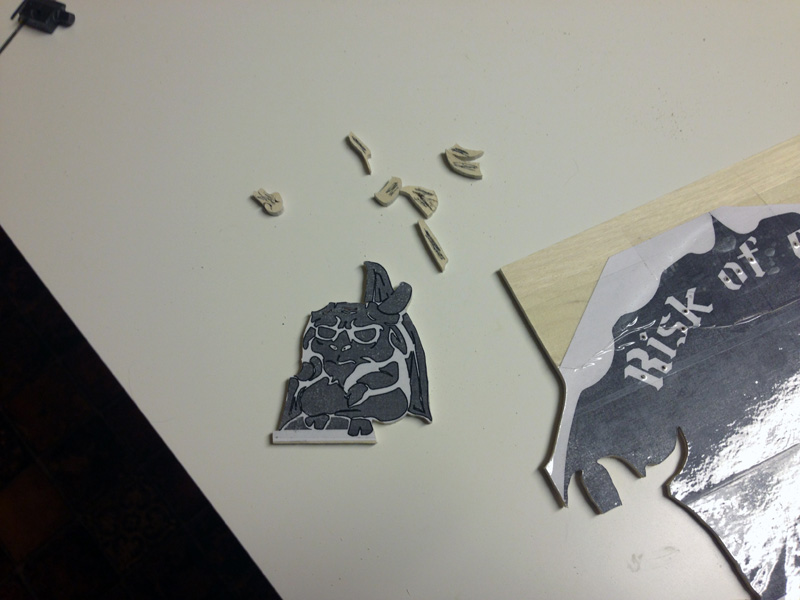
Then the main part of the project starts – the sawing of all the pieces of the main image. I cut the top diamond and the arrow (the arrow is stained in the same way as the backing piece). I continue cutting the characters by removing the bulk of the demon.
Demon and a few of his pieces
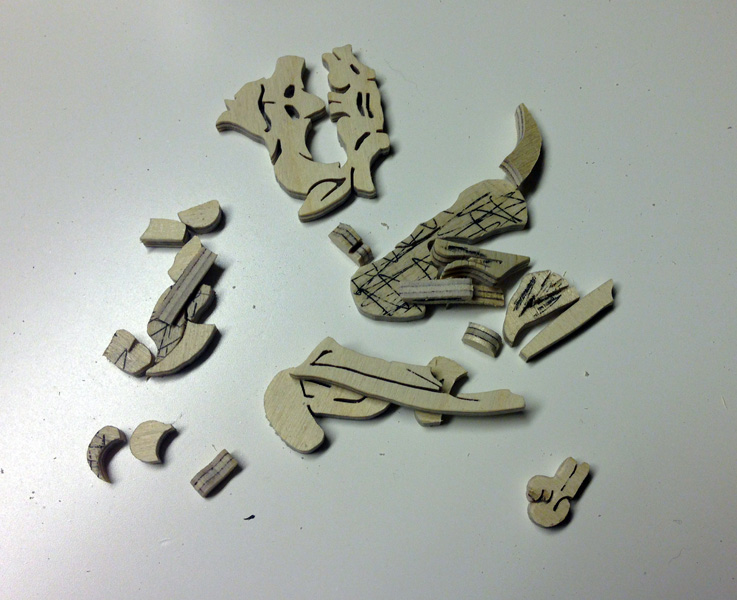
After this I cut all the pieces of the demon, including the internal cuts. I do most of the cutting with a #2 reverse tooth blade. Some of the cuts are a bit challenging since the pieces are quite small.
All the pieces of a demon
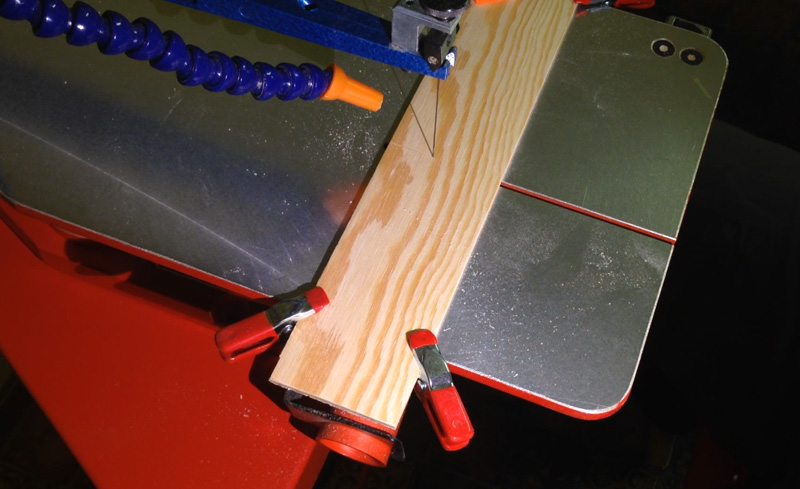
Even more challenging is not losing pieces through the gap in the saw table insert (I have done so with previous projects). A simple trick to prevent this is to make a zero clearance base by taking a flat piece of wood (I use a 4mm piece of plywood), cutting into it and clamping it in place. I saw this trick on the jimmydiresta’s youtube channel (Bandsaw Tips) and applied it to this, very similar, problem.
Zero clearance “plate”
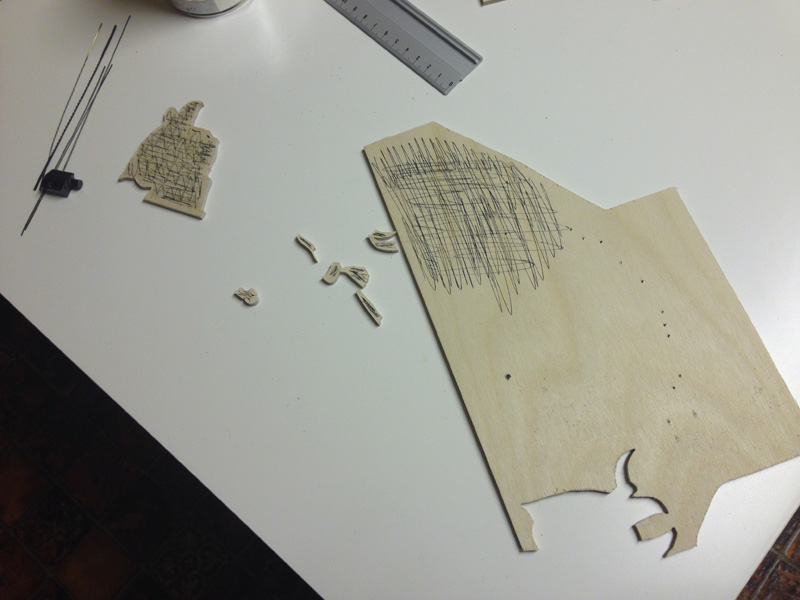
A second issue is that with this many small and odd shaped parts it is difficult to quickly know which piece goes where. To help with this I marked the back of the wood with a pen. Much less time is thus spent turning the pieces over in your hand trying to figure out which side is up.
Back of the front piece marked with pen
I did, unfortunately, encounter another problem commonly found with plywood: tear-out of the top layer. This happend only on the demon’s right hand and I had to cut another hand. Luckily I had a kept the scrap wood and used a piece coming from just next to the original hand and the shade and grain is thus extremely similar.
The demon’s second hand
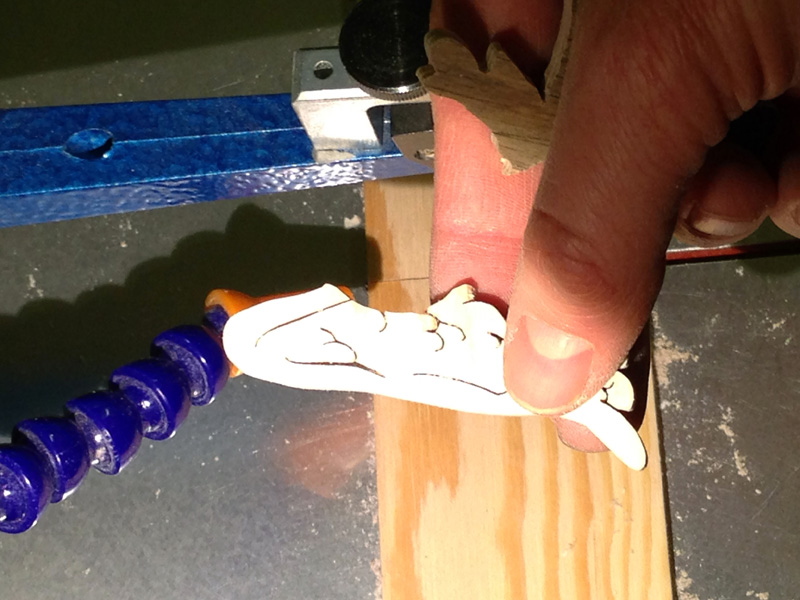
Once the demon was done I repeated the process with the angel. The angel is a much simpler character and took much less time to cut and there were no problems with any of the pieces. The next step is to cut all the letters. This font is very angular and quite easy to cut.
The wing of an angel
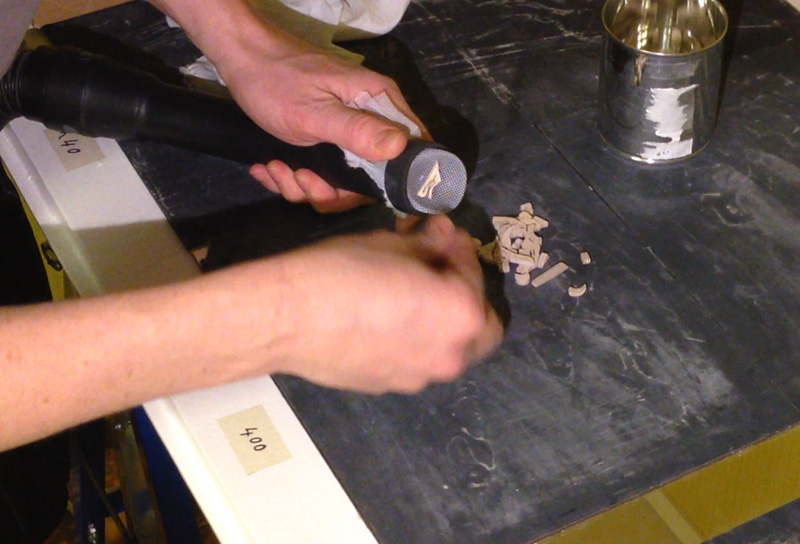
After all the sawing is done I spent quite a lot of time sanding (I find this is true for most projects involving wood). I remove all the fuzzy edges from the back and sand up to 240 grit. I also use various strips of sandpaper, home made scroll saw sanding belts, emery boards etc to sand between the cuts. I sand the front of all the pieces to 800 grit with a very slight rounded edge. To remove all the dust I place a mesh net on the nozzle of a vacuum cleaner and go over all the pieces with it. It is an effective way to remove the sawdust from between the cuts.
Dust removal
I did several dry builds on the pattern to make sure that all the pieces fit and have the correct look. When I was satisfied with everything I commenced the glueing. I mentioned that the pivot hole is pivotal in aligning the pieces. To do so I placed a skewer (later also serving as the axle of the indicator) into both pieces after applying glue to the back of the front piece. Once in place I clamped these pieces overnight.
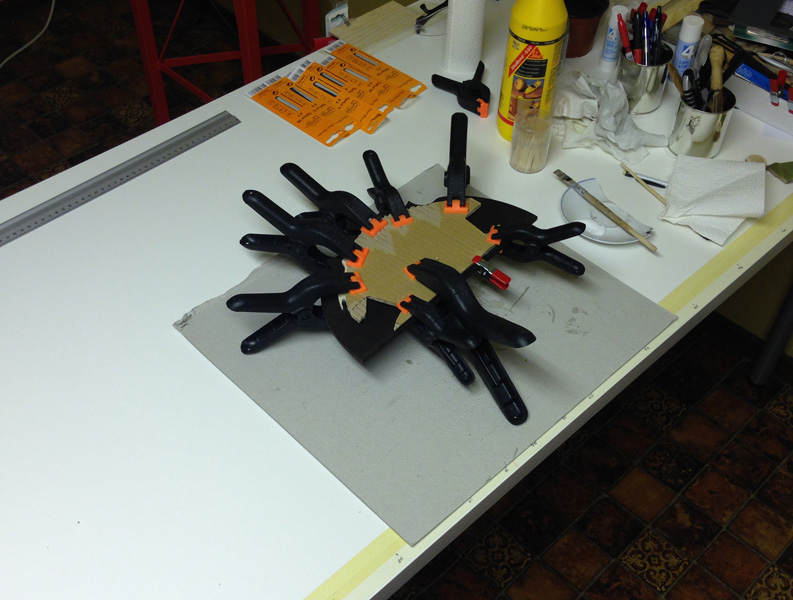
Clamping the main pieces together
Again I arrange all the pieces in their places before adding glue and then one by one I remove them, add glue and replace to ensure the image remains as planned. This process took approximately 3 hours.
Doing a dry fitting of the characters
Gluing done!
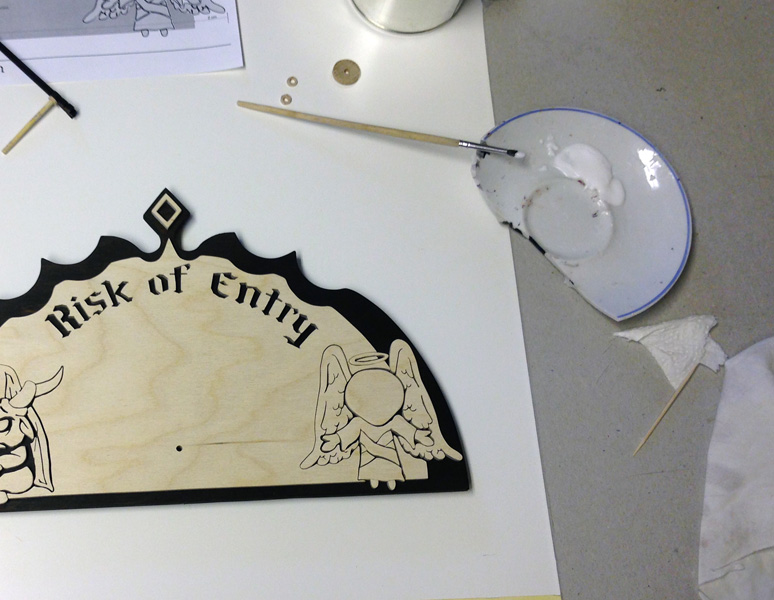
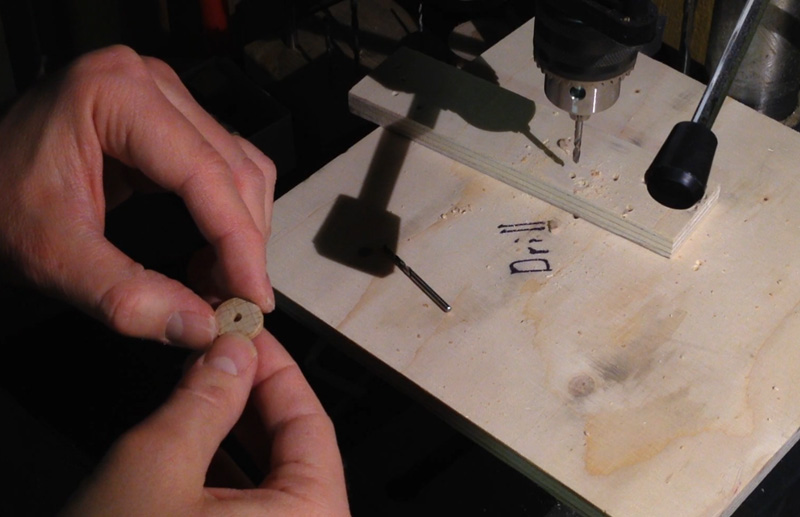
I also made two wooden washers for the indicator and started the assembly of this part. I also made 3 small legs from a piece of dowel.
Large washer for the back
Freshly sanded wooden legs
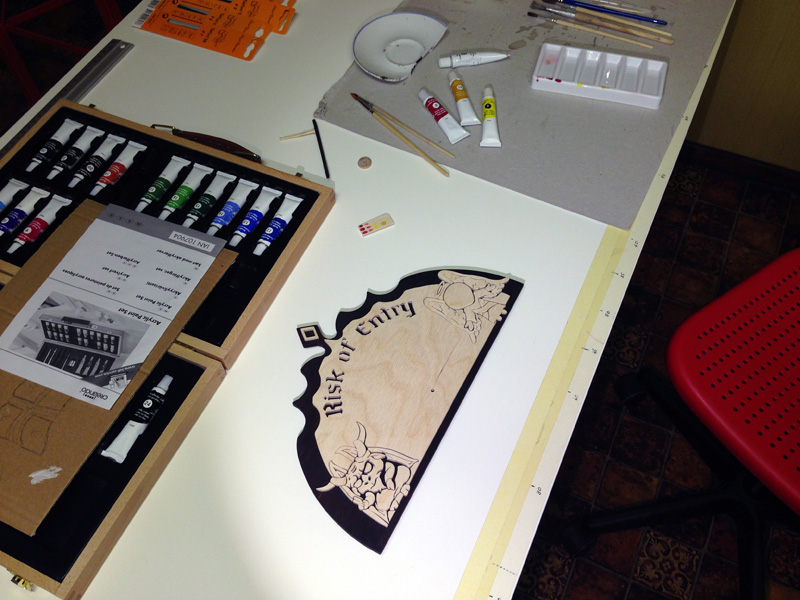
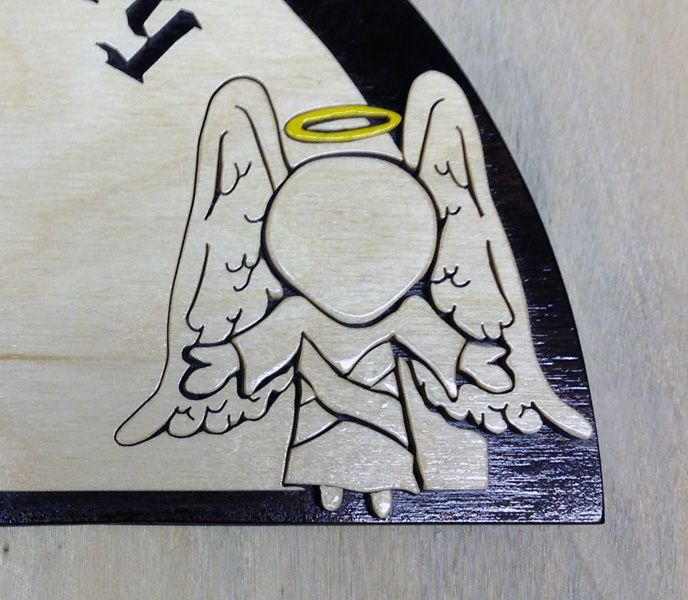
To add some highlights to the images I paint the demon’s eyes red and white and the angels halo yellow.
Preparing to paint
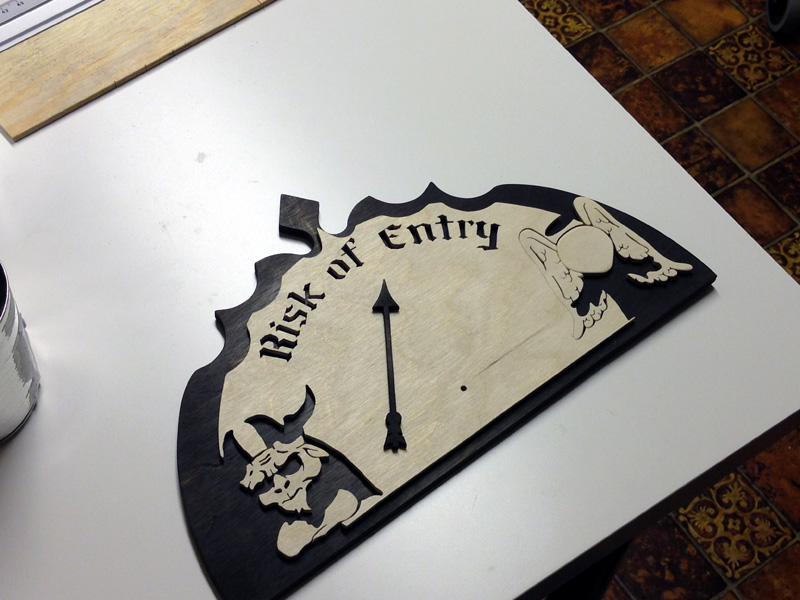
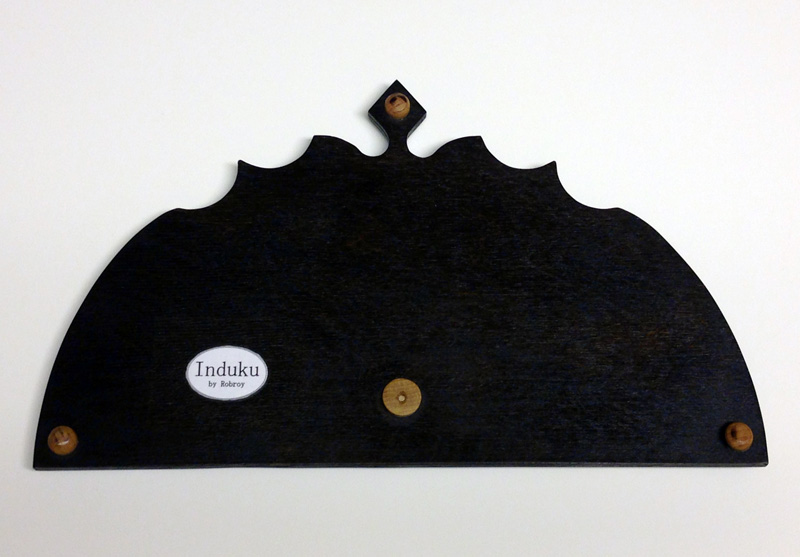
To finish the mood barometer I coated the back and front (and indicator arrow) with several coats of glossy lacquer. The last step is of course to add the indicator arrow and the shop logo.
Angel closeup – after 4 coats of lacquer
Back of Mood Barometer with shop lable
I am quite happy with how well the image in wood reflects the original design. I usually spend quite a lot of time designing pieces and often make only one. This item was commissioned and I will probably not stock these. I do however think other people may find inspiration from this design and make their own mood barometers. If you, however, want to make the same one the design is available for sale (Pattern for sale on Induku on Etsy).


 Induku Design